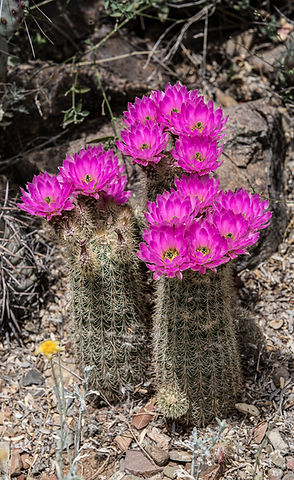
A Desert Full of Surprises
The stately Saguaro cactus brought me to Tucson. The greater concentration of cacti is in the desert west of Tucson. Arriving ten miles out of the city, I crested a ridge that serves to separate the metro area from the desert. The initial view was truly breathtaking. I could see about 40 miles into the desert—a vast, quiet expanse studded with cacti—out to where the mountain range materialized through the haze.
To reach my destination I had to leave my vantage point and concentrate on negotiating my 35-foot motor home, towing a car, down a winding, mile-long, narrow road that descended to the desert floor. About five miles farther I arrived at what I think is the only campground in the region for tents and RVs offering a true desert-camping experience with minimal human influences.
The Gilbert-Ray Campground is surrounded by 15 species of cacti and many other survivalist plants. When not hiking the trails radiating from the park, my picture window (the motorhome windshield) provided panoramic views. Each day, the changing light and weather shifted the desert’s mood, softening it one moment and sharpening its edges the next. Several evenings ended with surreal sunsets backlighting the distant mountain ridges.
Mornings, I was woken by the mourning doves filling the desert quiet with their unique melody. Following a light breakfast, I walked through the park looking for conversations with other campers. I found a common thread of interest; like me, they had come with a curiosity to learn about the life of the desert and to understand the quiet force that allows such fragile beings to persist here.
Saguaro National Park
About four miles farther down the road is the Saguaro National Park portion of the desert. At the headquarters, the park provides a very informative video overview of the history of the region. Fortunately, a park naturalist was available to provide a guided tour following our video introduction.
Our guide, Bob Perrill, had extensive knowledge of the Saguaro and other cacti, local birds, and animals. He provided numerous other interesting facts about the flora and fauna in that region of the desert. Walking along a trail, he pointed out the residence of a tarantula. One of many holes in the ground the size of a quarter, this one was covered with fine, white silk spun by the spider—a delicate threshold marking a life lived mostly unseen.
During our 90-minute walking tour across the road from the headquarters, Bob instilled in me a real sense of what it takes for plants and animals to survive, coexist and thrive in a very harsh environment. I began to appreciate how the Saguaros I saw on entering the region play a critical role in the lifecycle of the animals and some other plant species. Frequently visible are Gila woodpeckers’ nests in the Saguaros, which are often round holes in the trunks of the cacti. After their chicks have fledged, they abandon the nest, and it becomes a new home for a variety of birds and animals—a small but enduring cycle of adaptation and inheritance.
Saguaro giants live to be 150–175 years old, occasionally 200 years, during which time they may or may not sprout arms. No one seems to know why some do and some don't. If they do, the buds begin to appear when a cactus is 50 to 70 years old. The Saguaro may reach 50 feet and weigh in at 6 tons—much of it water stored within their expandable cellular structure that holds moisture to sustain them through the dry seasons. Standing beside one, I couldn’t help but feel the weight of time it carried hidden beneath its towering stillness.
My thanks to Bob Perrill. His tour left me not only better informed, but quietly humbled—grateful that a month earlier I had decided to explore the desert southwest.